
prsnlly: Redesigning the Bra Shopping Experience
prsnlly: Redesigning the Bra Shopping Experience
Overview
Overview
An experiential retail concept that transforms bra shopping from intimidating and impersonal to empowering and guided.
An experiential retail concept that transforms bra shopping from intimidating and impersonal to empowering and guided.
Team
Team
Eliza Friel (Copywriter)
Gabby Reed-Carlock (UX & Experiential)
Hannah Wente (Copywriter)
Sarah Flynn (Art Director)
Eliza Friel (Copywriter)
Gabby Reed-Carlock (UX & Experiential)
Hannah Wente (Copywriter)
Sarah Flynn (Art Director)
role
role
UX Designer
Strategist
Experiential Designer
UX Designer
Strategist
Experiential Designer
tools
tools
Figma
SketchUp
Enscape
Canva
Procreate
Figma
SketchUp
Enscape
Canva
Procreate
focus
focus
Emotional UX
Service Design
Retail Experience
Emotional UX
Service Design
Retail Experience
platform
platform
Physical Store Concept + Digital Integration
Physical Store Concept + Digital Integration
The Problem
Why bra shopping is broken
Bra shopping asks customers to make deeply personal decisions in environments that are often rushed, exposed, and overwhelming. Shoppers are expected to understand sizing, fit, and comfort on their own—despite inconsistent standards across brands and limited guidance in-store.
The result is a category defined by compromise: settling for “good enough” rather than what actually fits.
The Problem
Why bra shopping is broken
Bra shopping asks customers to make deeply personal decisions in environments that are often rushed, exposed, and overwhelming. Shoppers are expected to understand sizing, fit, and comfort on their own—despite inconsistent standards across brands and limited guidance in-store.
The result is a category defined by compromise: settling for “good enough” rather than what actually fits.
The Problem
Why bra shopping is broken
Bra shopping asks customers to make deeply personal decisions in environments that are often rushed, exposed, and overwhelming. Shoppers are expected to understand sizing, fit, and comfort on their own—despite inconsistent standards across brands and limited guidance in-store.
The result is a category defined by compromise: settling for “good enough” rather than what actually fits.
The Problem
Why bra shopping is broken
Bra shopping asks customers to make deeply personal decisions in environments that are often rushed, exposed, and overwhelming. Shoppers are expected to understand sizing, fit, and comfort on their own—despite inconsistent standards across brands and limited guidance in-store.
The result is a category defined by compromise: settling for “good enough” rather than what actually fits.
Research approach
Research approach
To understand the emotional and practical realities of bra shopping, our team conducted a quantitative and qualitative survey focused on:
Shopping habits and frequency
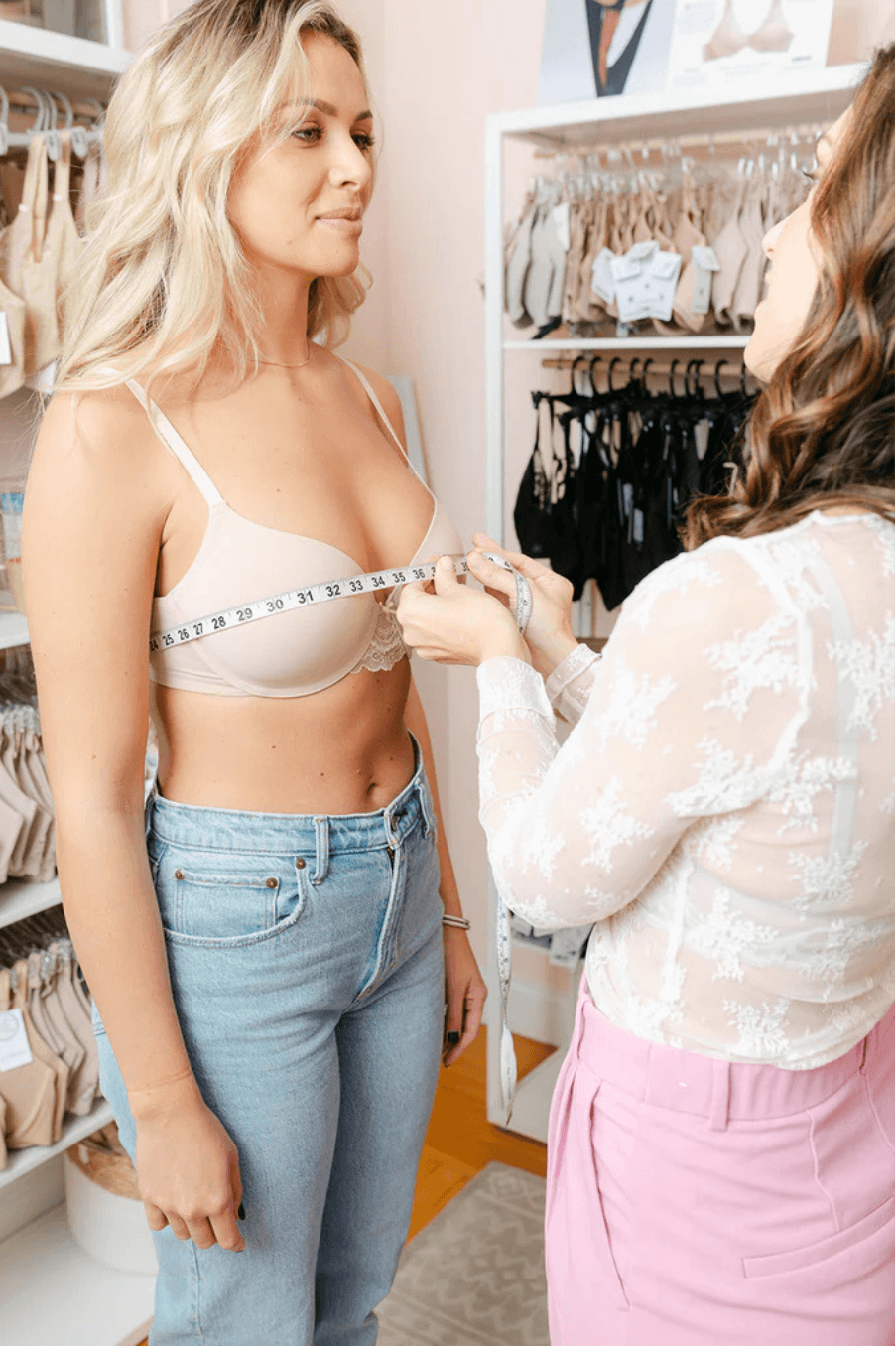
Experiences with professional fittings
Emotional pain points and frustrations
What customers value most when purchasing bras
Perceptions of inclusivity within the industry
The goal was to move beyond assumptions and identify recurring patterns across age, body type, and shopping behavior.
To understand the emotional and practical realities of bra shopping, our team conducted a quantitative and qualitative survey focused on:
Shopping habits and frequency
Experiences with professional fittings
Emotional pain points and frustrations
What customers value most when purchasing bras
Perceptions of inclusivity within the industry
The goal was to move beyond assumptions and identify recurring patterns across age, body type, and shopping behavior.
key Research findings
key Research findings
What we heard
What we heard
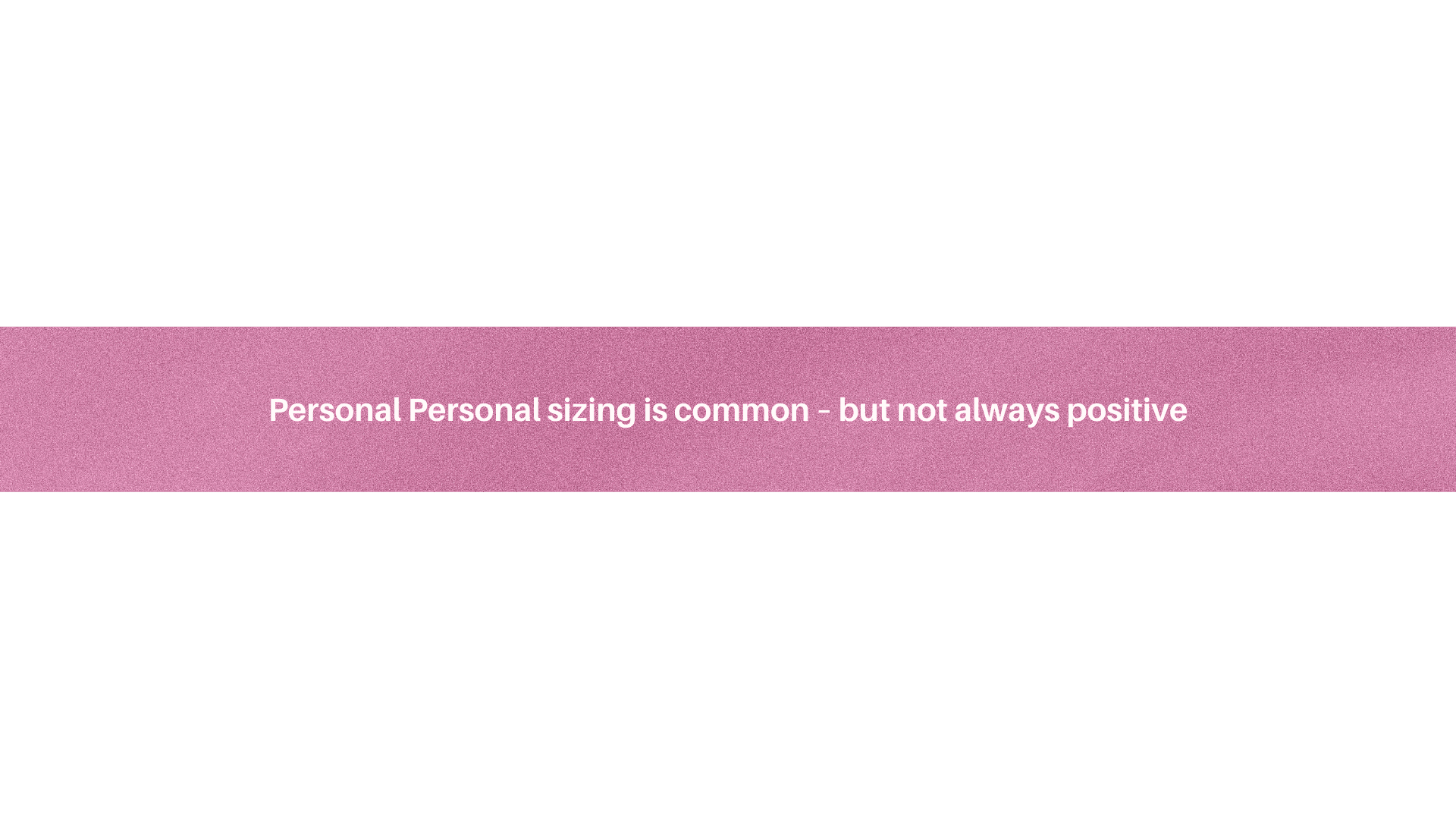
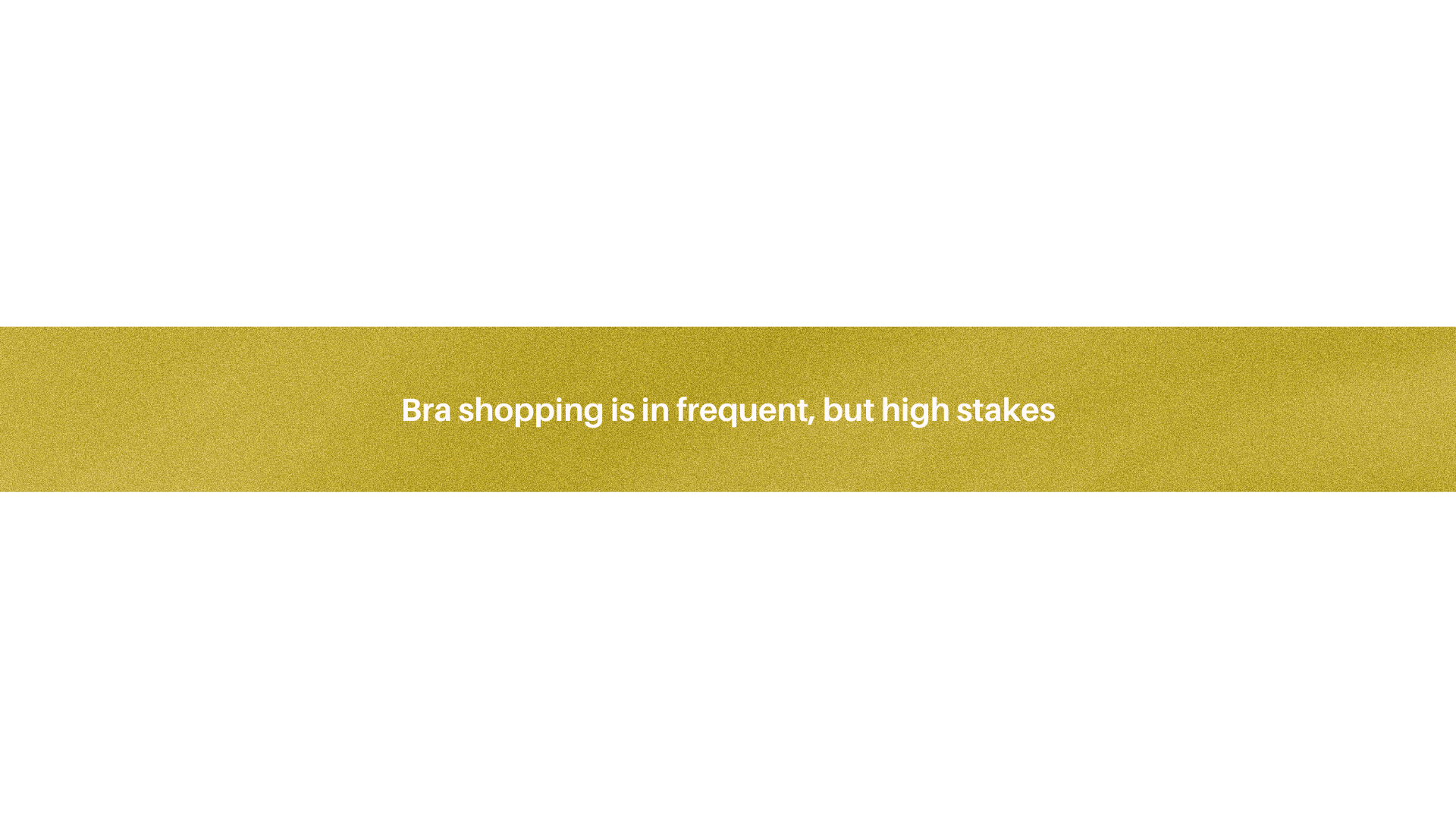
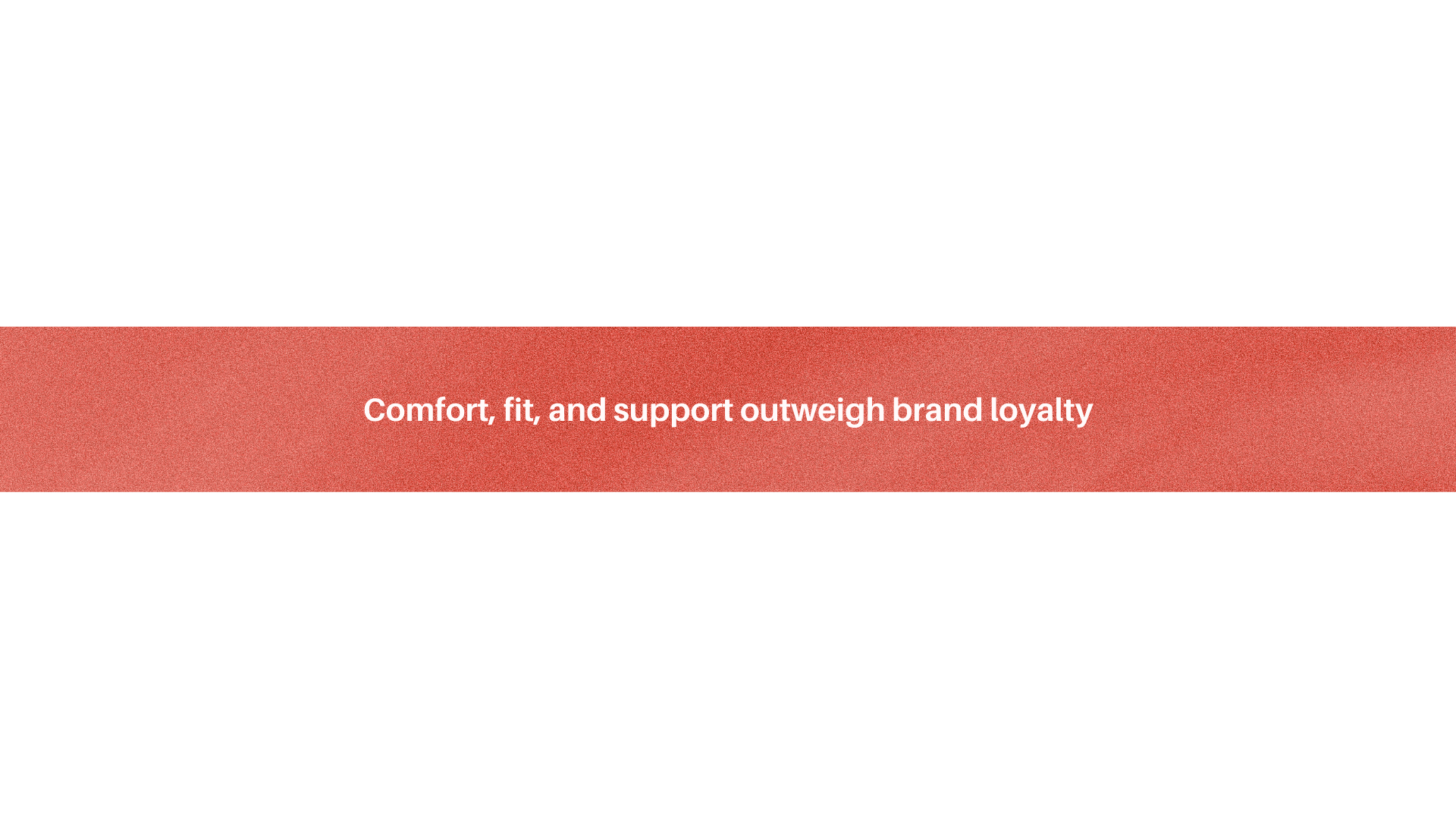
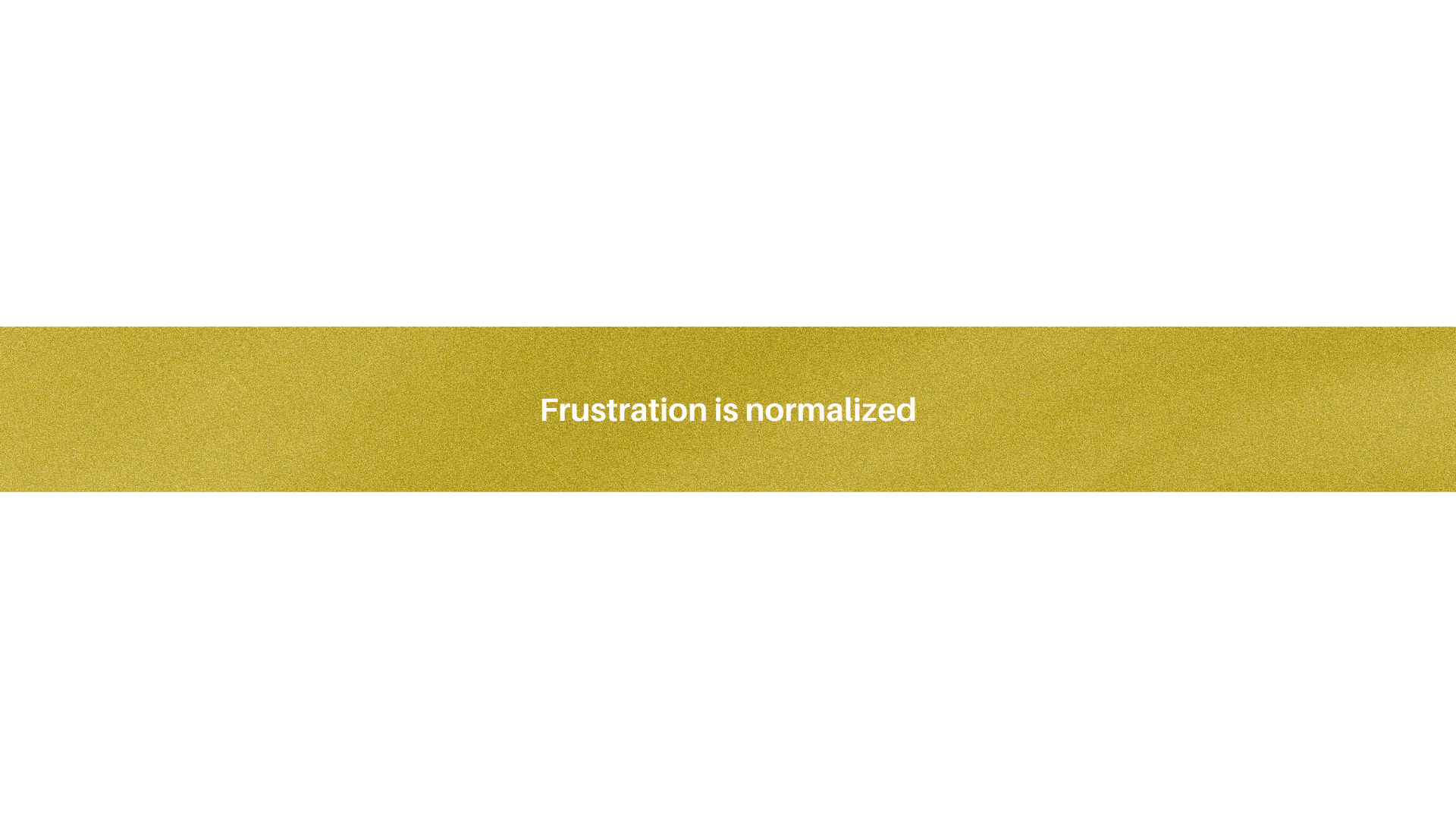
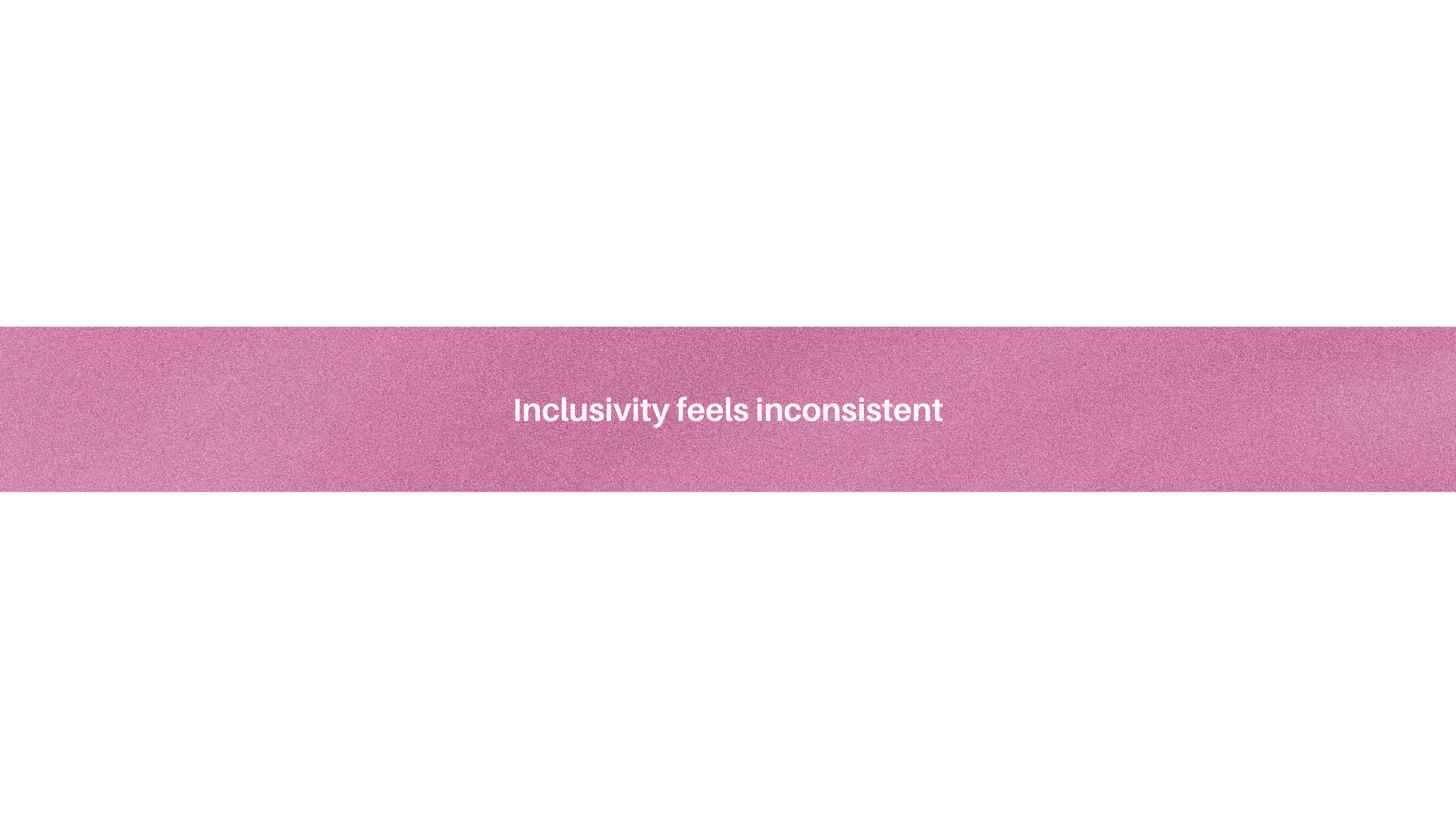
Several themes consistently emerged from the survey:
Several themes consistently emerged from the survey:
Core Insight
Core Insight
The emotional truth behind the data
The emotional truth behind the data
Bra shoppers want guidance—but not at the expense of dignity or control.
Bra shoppers want guidance—but not at the expense of dignity or control.
The research revealed a tension between:
Wanting expert help
And avoiding exposure, judgment, or pressure
The research revealed a tension between:
Wanting expert help
And avoiding exposure, judgment, or pressure
This insight reframed the problem from “better sizing” to “better trust.”
This insight reframed the problem from “better sizing” to “better trust.”
The Opportunity
The Opportunity
Reimagining the category
Reimagining the category
What if bra shopping felt less like self-diagnosis and more like a supported, personalized experience—one that evolves over time and respects personal boundaries?
This question became the foundation for prsnlly.
What if bra shopping felt less like self-diagnosis and more like a supported, personalized experience—one that evolves over time and respects personal boundaries?
This question became the foundation for prsnlly.
The Concept
The Concept
Introducing prsnlly
Introducing prsnlly
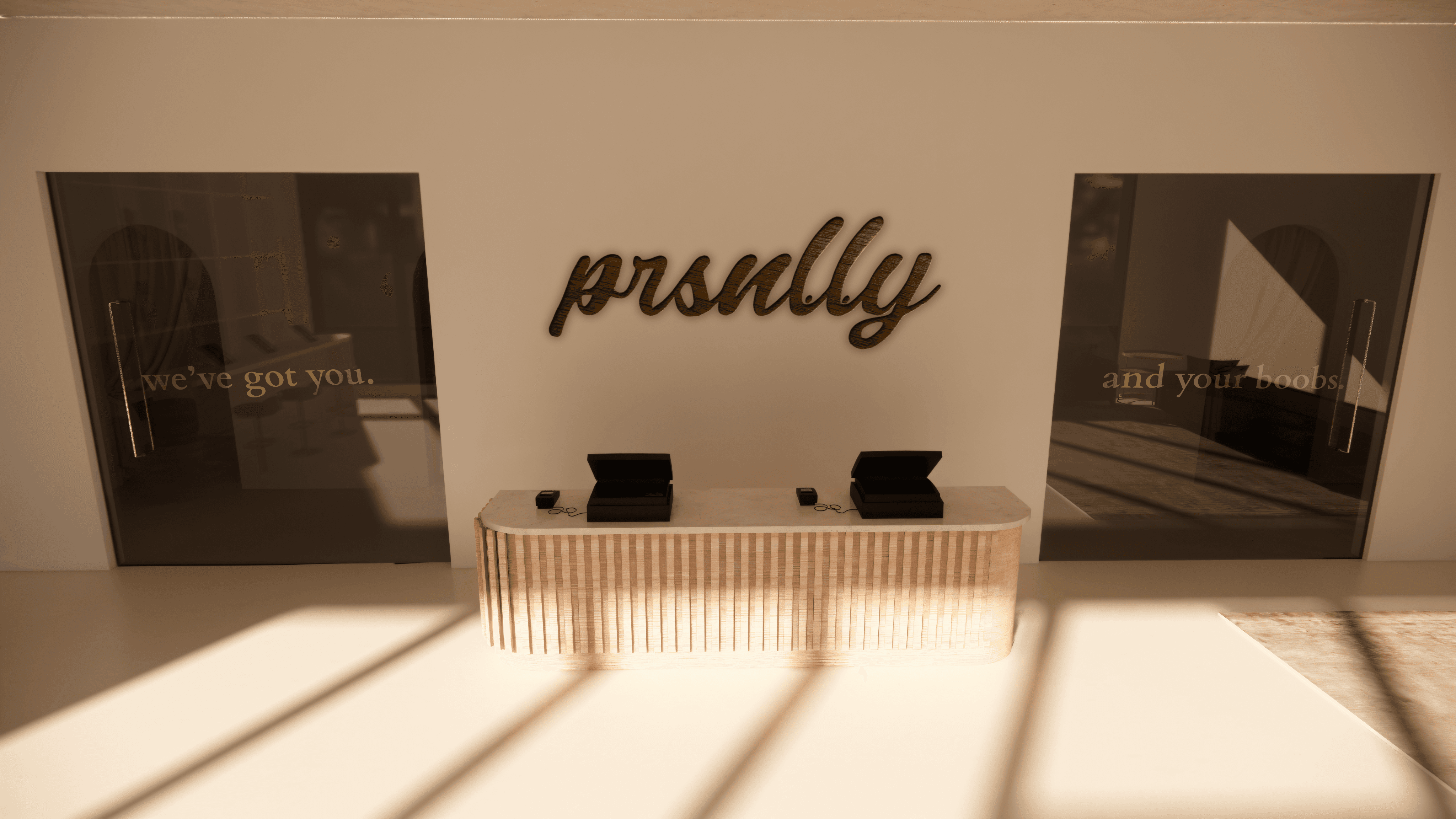
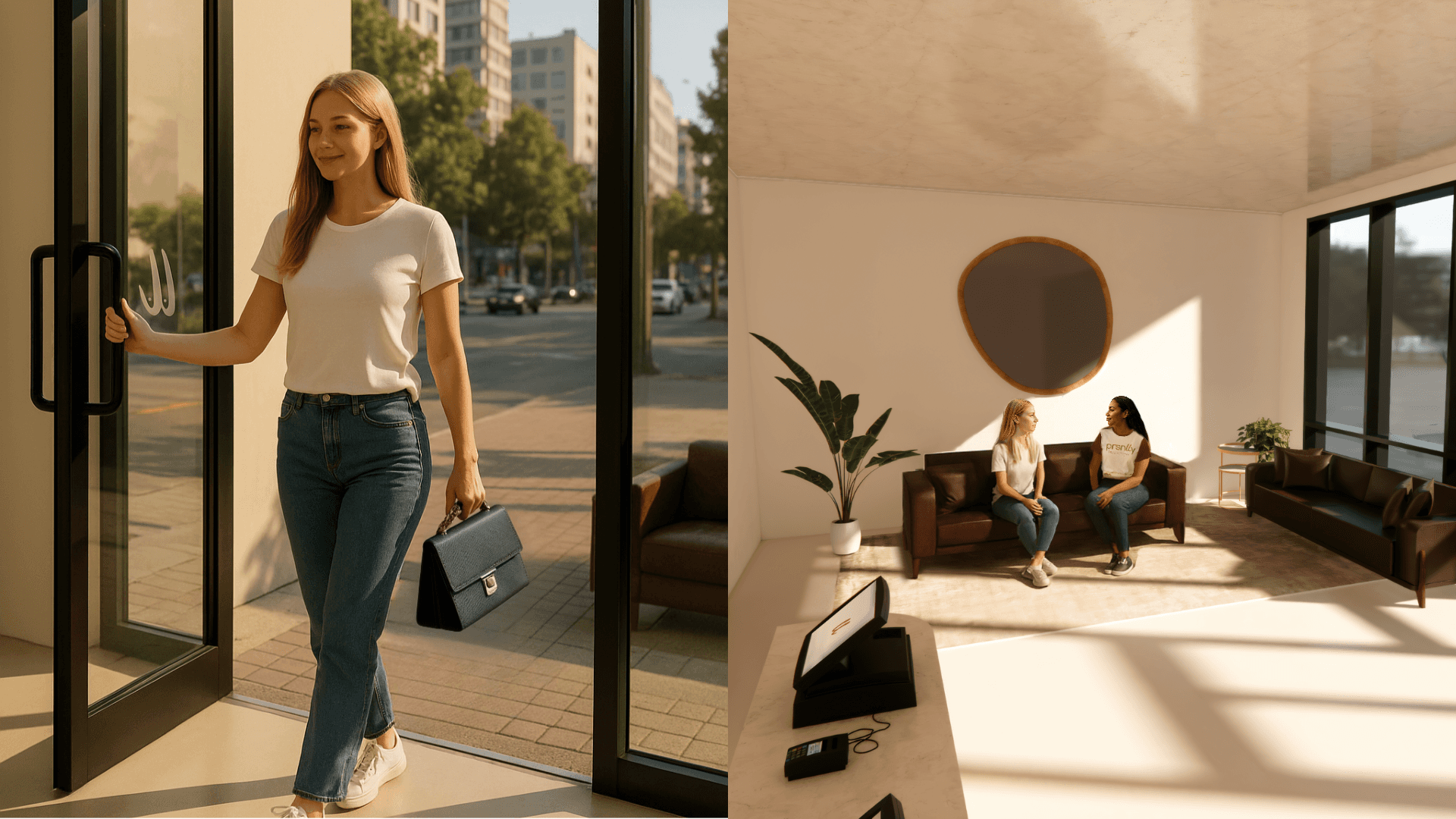
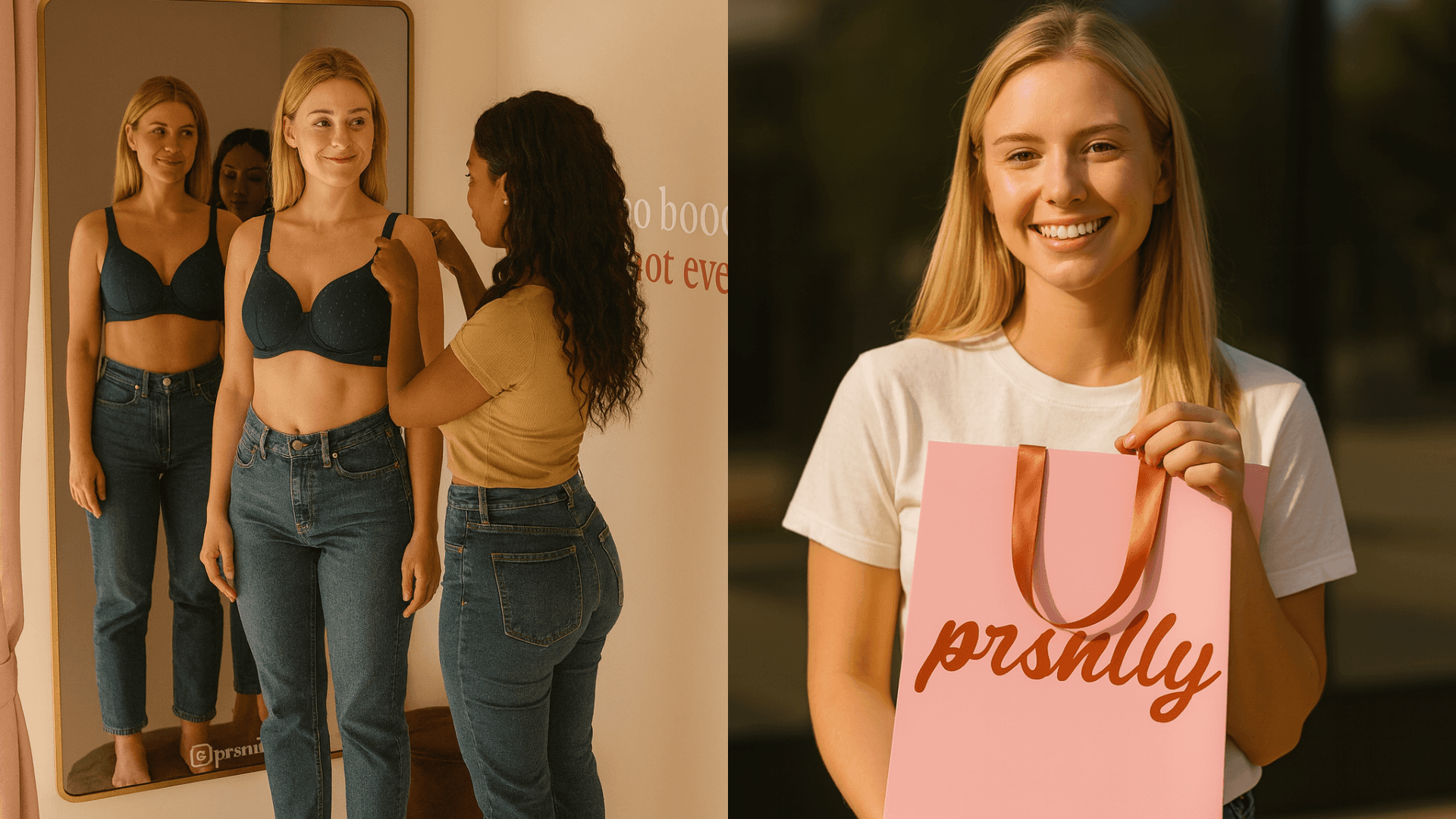
prsnlly is a bra brand and retail experience built around individualized fit, comfort, and preference—supported by both human expertise and a persistent digital profile.
Rather than forcing customers to start from scratch every time, prsnlly creates continuity across visits and channels.
prsnlly is a bra brand and retail experience built around individualized fit, comfort, and preference—supported by both human expertise and a persistent digital profile.
Rather than forcing customers to start from scratch every time, prsnlly creates continuity across visits and channels.

Our mission
Our mission
Make bras as personal as the people who wear them. because no one fits neatly into a letter and a number.
At prsnlly, comfort, confidence, and individuality come standard, because you deserve something made for your boobs only.
Make bras as personal as the people who wear them. because no one fits neatly into a letter and a number.
At prsnlly, comfort, confidence, and individuality come standard, because you deserve something made for your boobs only.
Key Design Decisions
Key Design Decisions
Privacy over spectacle — responding directly to discomfort expressed around fittings
Guided choice over endless options — addressing frustration and overwhelm
Personalization as continuity — solving the pain of repeatedly “starting over”
Privacy over spectacle — responding directly to discomfort expressed around fittings
Guided choice over endless options — addressing frustration and overwhelm
Personalization as continuity — solving the pain of repeatedly “starting over”
The Role of Technology
The Role of Technology
Reduces repetition and awkward conversations
Supports human fitting rather than replacing it
Gives customers control over what is remembered and when
Trust is treated as a design requirement—not a byproduct
Reduces repetition and awkward conversations
Supports human fitting rather than replacing it
Gives customers control over what is remembered and when
Trust is treated as a design requirement—not a byproduct

The iPad Customization Experience
The iPad Customization Experience
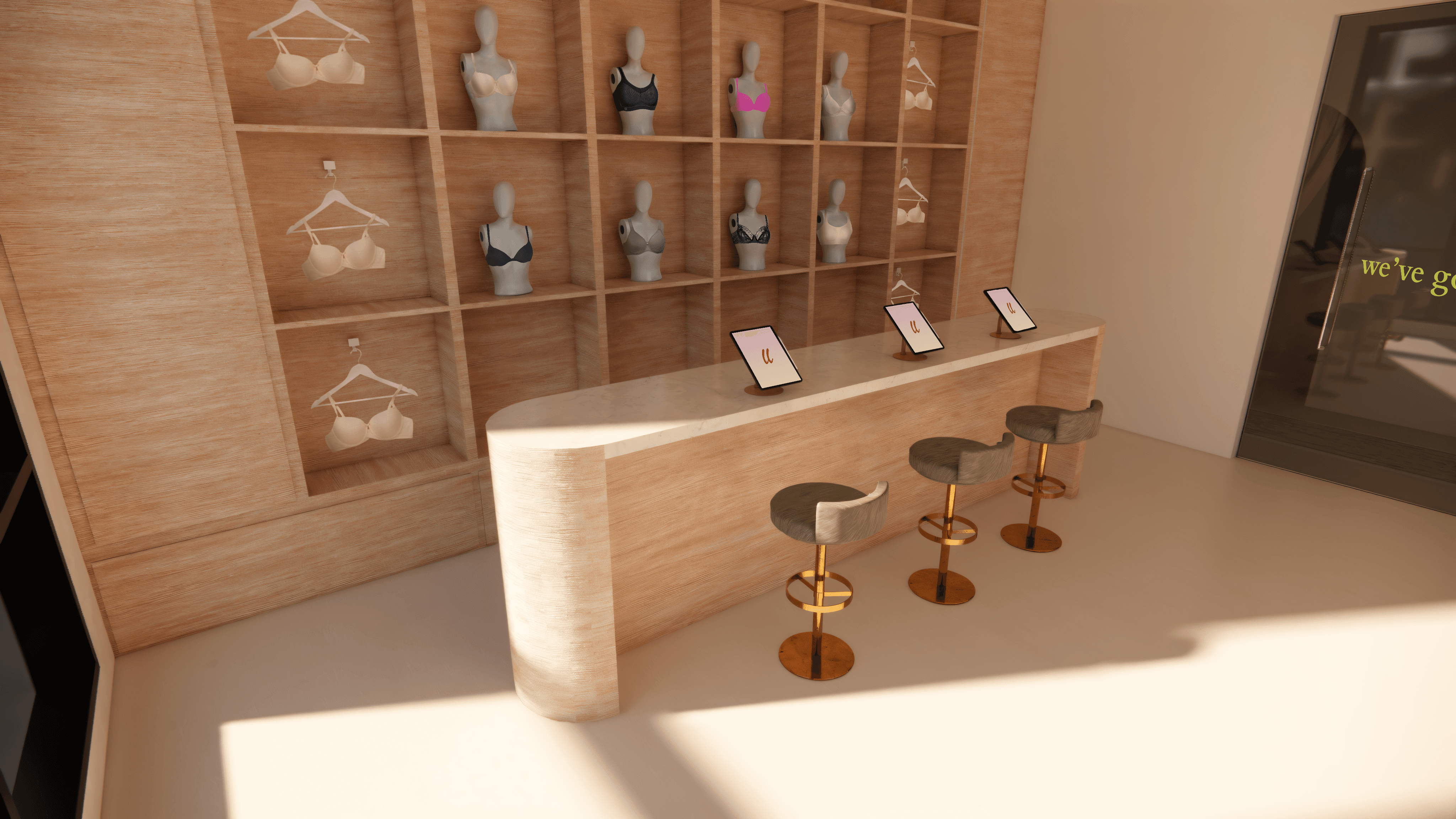
The iPad serves as the primary interface for personalization within the prsnlly experience—guiding customers through bra customization in a way that feels private, intentional, and supportive.
Rather than asking customers to verbally explain preferences in a public space, the iPad creates a calm, self-directed moment where they can explore fit, comfort, and design options at their own pace.
The iPad serves as the primary interface for personalization within the prsnlly experience—guiding customers through bra customization in a way that feels private, intentional, and supportive.
Rather than asking customers to verbally explain preferences in a public space, the iPad creates a calm, self-directed moment where they can explore fit, comfort, and design options at their own pace.
Why This Matters
Why This Matters
Beyond bras
Beyond bras
prsnlly demonstrates how experience design can reshape intimate retail categories by centering emotional safety alongside functionality.
It reframes personalization as respect—and shows how research-driven design can restore confidence in everyday experiences.
prsnlly demonstrates how experience design can reshape intimate retail categories by centering emotional safety alongside functionality.
It reframes personalization as respect—and shows how research-driven design can restore confidence in everyday experiences.
Reflection
Reflection
What I learned
What I learned
Conducting this research reinforced how normalized frustration can hide meaningful design opportunities. When discomfort is expected, it often goes unchallenged.
This project pushed me to design not just for efficiency or aesthetics—but for trust, autonomy, and emotional safety.
Conducting this research reinforced how normalized frustration can hide meaningful design opportunities. When discomfort is expected, it often goes unchallenged.
This project pushed me to design not just for efficiency or aesthetics—but for trust, autonomy, and emotional safety.