Allianz × Alaska Airlines: Offer Optimization System
Allianz × Alaska Airlines: Offer Optimization System
Overview
Overview
Designing and structuring modular offer variations for A/B testing across the Alaska Airlines booking flow.
Designing and structuring modular offer variations for A/B testing across the Alaska Airlines booking flow.
role
role
UX Designer
UI Designer
UX Designer
UI Designer
tools
tools
Figma
Figma
focus
focus
Conversion Optimization
Design Systems
Enterprise UX
Conversion Optimization
Design Systems
Enterprise UX
platform
platform
Desktop + Mobile Booking Flow
Desktop + Mobile Booking Flow
context
context
Where Optimization Lives
Where Optimization Lives
The Alaska Airlines booking flow includes travel insurance offers powered by Allianz.
These offers appear at key decision points:
Flight checkout
Trip confirmation
Add-on selection
Small changes in layout, copy, or hierarchy can significantly impact:
Attachment rate
Conversion
Revenue per booking
This project focused on building scalable variations for structured testing.
The Alaska Airlines booking flow includes travel insurance offers powered by Allianz.
These offers appear at key decision points:
Flight checkout
Trip confirmation
Add-on selection
Small changes in layout, copy, or hierarchy can significantly impact:
Attachment rate
Conversion
Revenue per booking
This project focused on building scalable variations for structured testing.
The foundation
The foundation
Starting With the Highest-Traffic Offer
Starting With the Highest-Traffic Offer
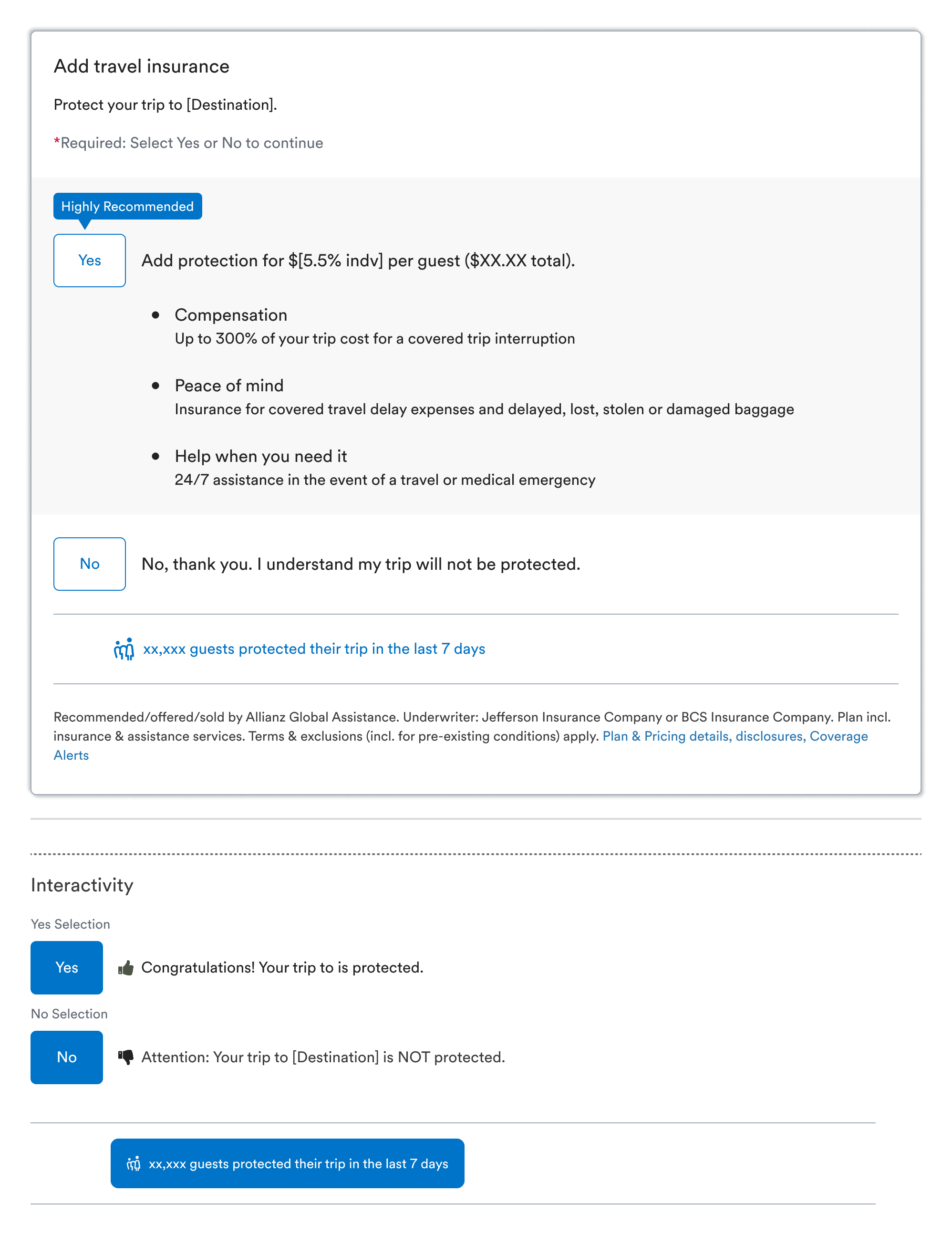
Rather than designing a new offer from scratch, I began with Alaska Airlines’ highest-trafficked live insurance offer — the version seen by the majority of customers during checkout.
This was intentional.
If optimization improves performance here, even small gains can translate to significant revenue impact.
The goal was not redesign for aesthetics.The goal was performance improvement through structured experimentation.
Rather than designing a new offer from scratch, I began with Alaska Airlines’ highest-trafficked live insurance offer — the version seen by the majority of customers during checkout.
This was intentional.
If optimization improves performance here, even small gains can translate to significant revenue impact.
The goal was not redesign for aesthetics.The goal was performance improvement through structured experimentation.
ideation
ideation
From Static Offer to Modular System
From Static Offer to Modular System
I deconstructed the live offer into key components:
Header
Yes/No Selection
Benefits Section
Social Proof
Footer
For each section, I designed multiple structured variants.
I deconstructed the live offer into key components:
Header
Yes/No Selection
Benefits Section
Social Proof
Footer
For each section, I designed multiple structured variants.

By the end: 564 total variants created
By the end: 564 total variants created
Instead of “one better offer,” I built a modular system that allows components to be mixed and matched to form test plans.
Instead of “one better offer,” I built a modular system that allows components to be mixed and matched to form test plans.
refinement
refinement
From Exploration to Intentional Reduction
From Exploration to Intentional Reduction
Creating hundreds of variations was only the first step. The real work began in refinement.
With 564 possible combinations, not every variant deserved to move forward. I evaluated each component through a performance lens — asking:
Does this change isolate a meaningful variable?
Is the hierarchy clearer or just different?
Does this align with Alaska’s design system?
Is the behavioral hypothesis strong enough to test?
Redundant variations were eliminated. Minor visual tweaks without strategic distinction were removed. Components were standardized where clarity mattered more than novelty.
Creating hundreds of variations was only the first step. The real work began in refinement.
With 564 possible combinations, not every variant deserved to move forward. I evaluated each component through a performance lens — asking:
Does this change isolate a meaningful variable?
Is the hierarchy clearer or just different?
Does this align with Alaska’s design system?
Is the behavioral hypothesis strong enough to test?
Redundant variations were eliminated. Minor visual tweaks without strategic distinction were removed. Components were standardized where clarity mattered more than novelty.

By the end: 209 variants strategically selected for testing
By the end: 209 variants strategically selected for testing
Optimization isn’t about generating options. It’s about narrowing intelligently.
Optimization isn’t about generating options. It’s about narrowing intelligently.
Construction
Construction
Building Structured Test Plans
Building Structured Test Plans
Using the strongest variants from each section, I combined components into complete offers and assembled formal test plans.
These were built to:
Compare against the live champion version
Measure attachment rate impact
Identify behavioral influence drivers
Inform future iteration cycles
This work bridged design and analytics.
Using the strongest variants from each section, I combined components into complete offers and assembled formal test plans.
These were built to:
Compare against the live champion version
Measure attachment rate impact
Identify behavioral influence drivers
Inform future iteration cycles
This work bridged design and analytics.
optimization
optimization
Designing for Revenue, Not Just Aesthetics
Designing for Revenue, Not Just Aesthetics
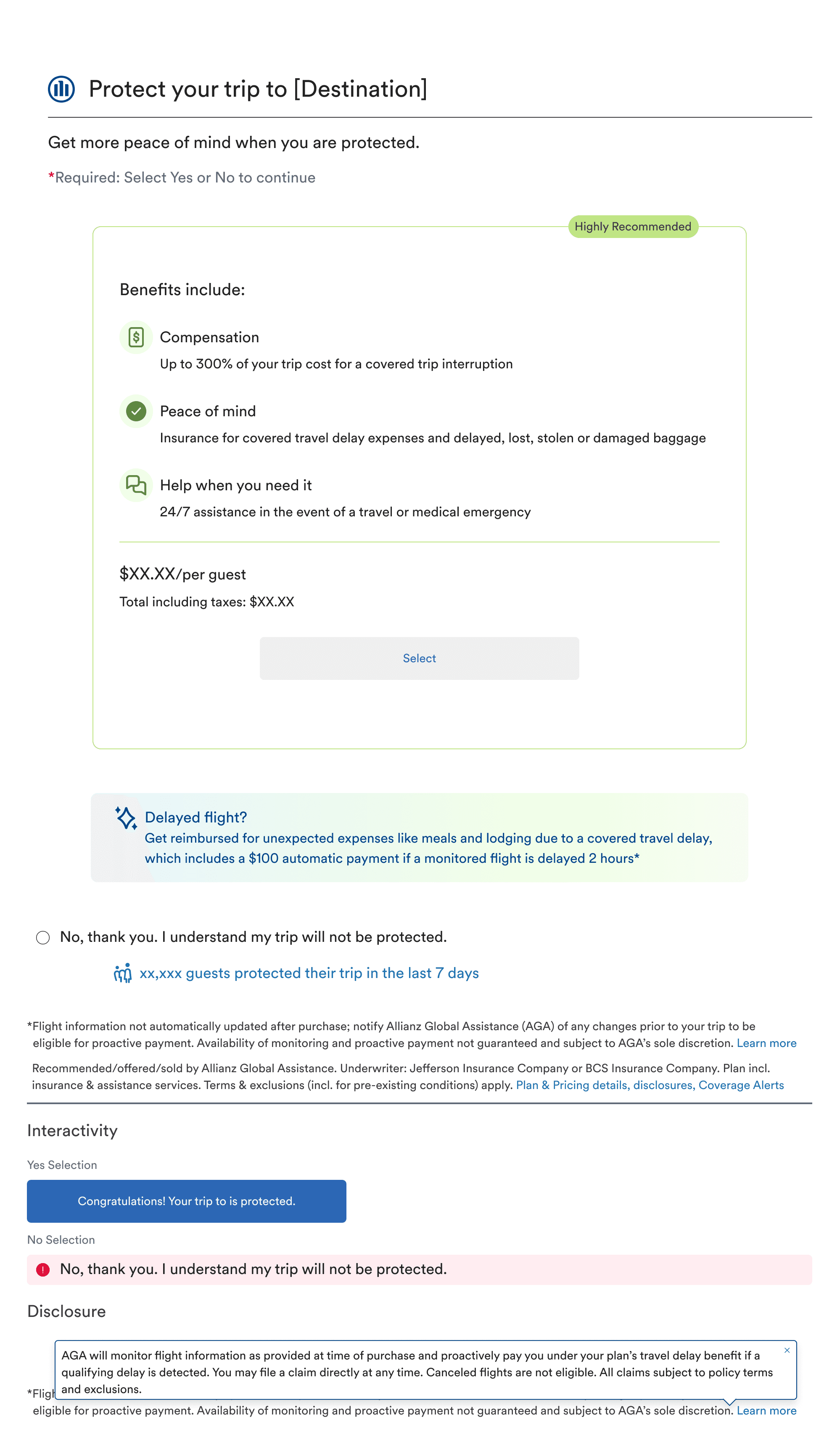
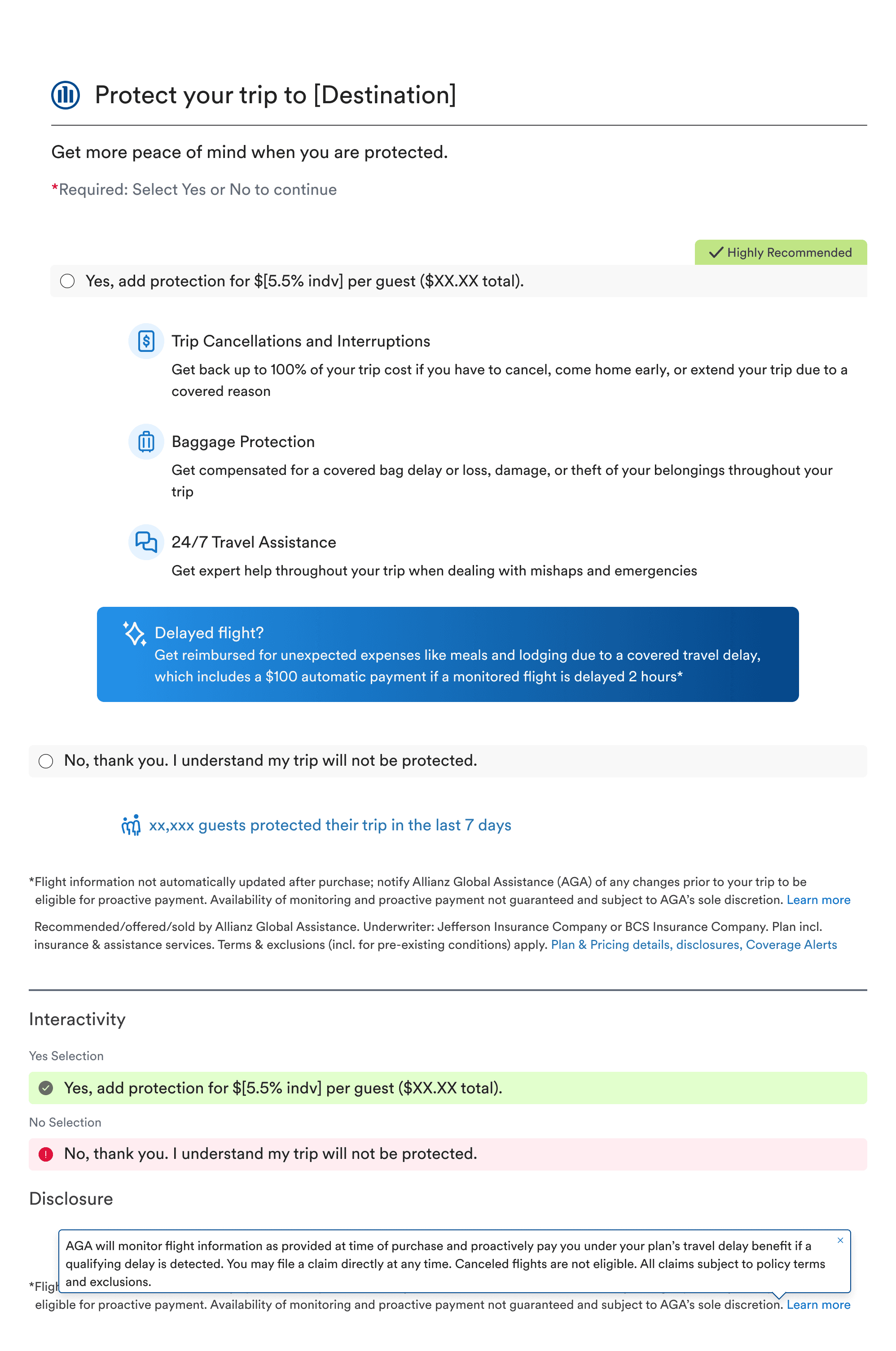
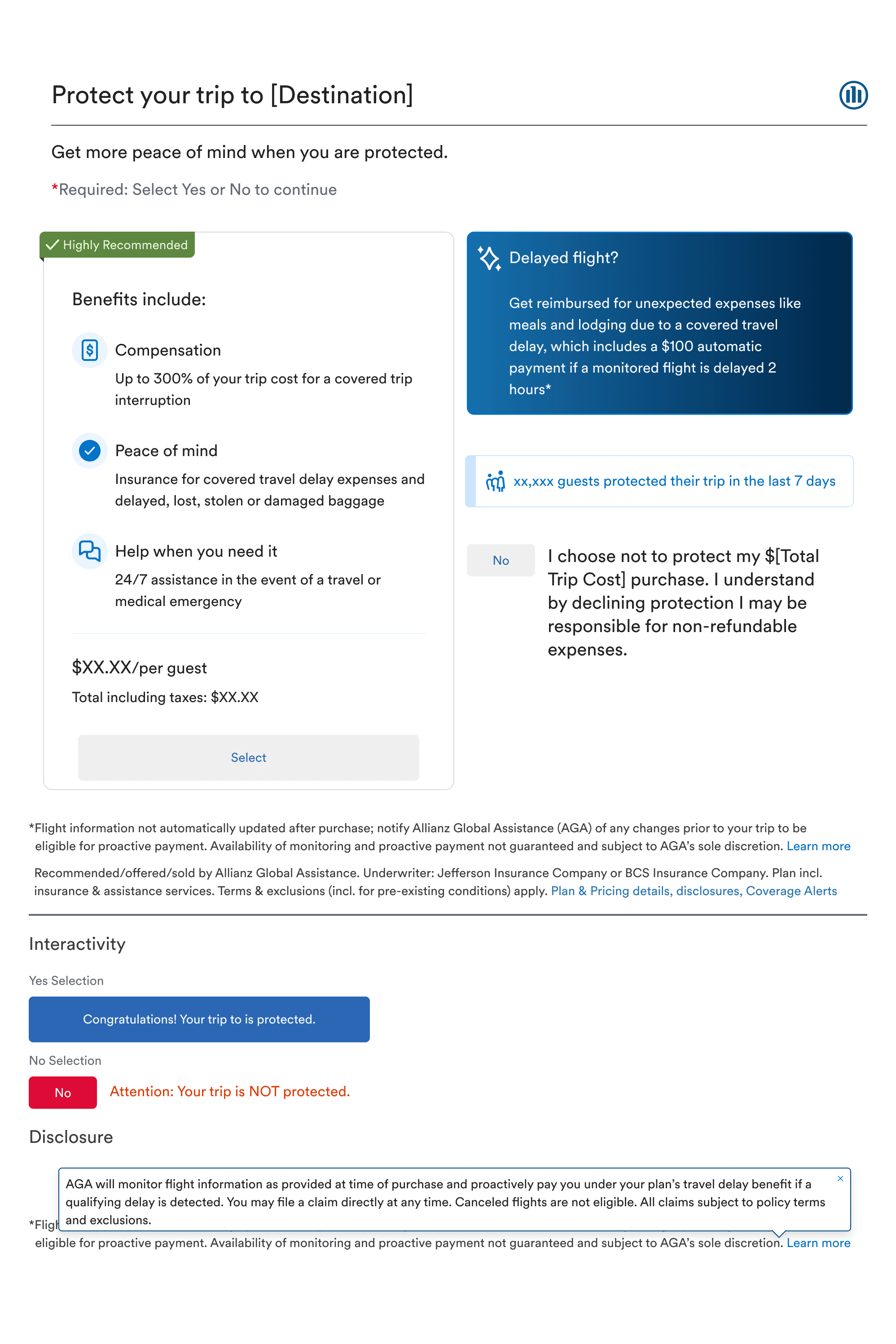
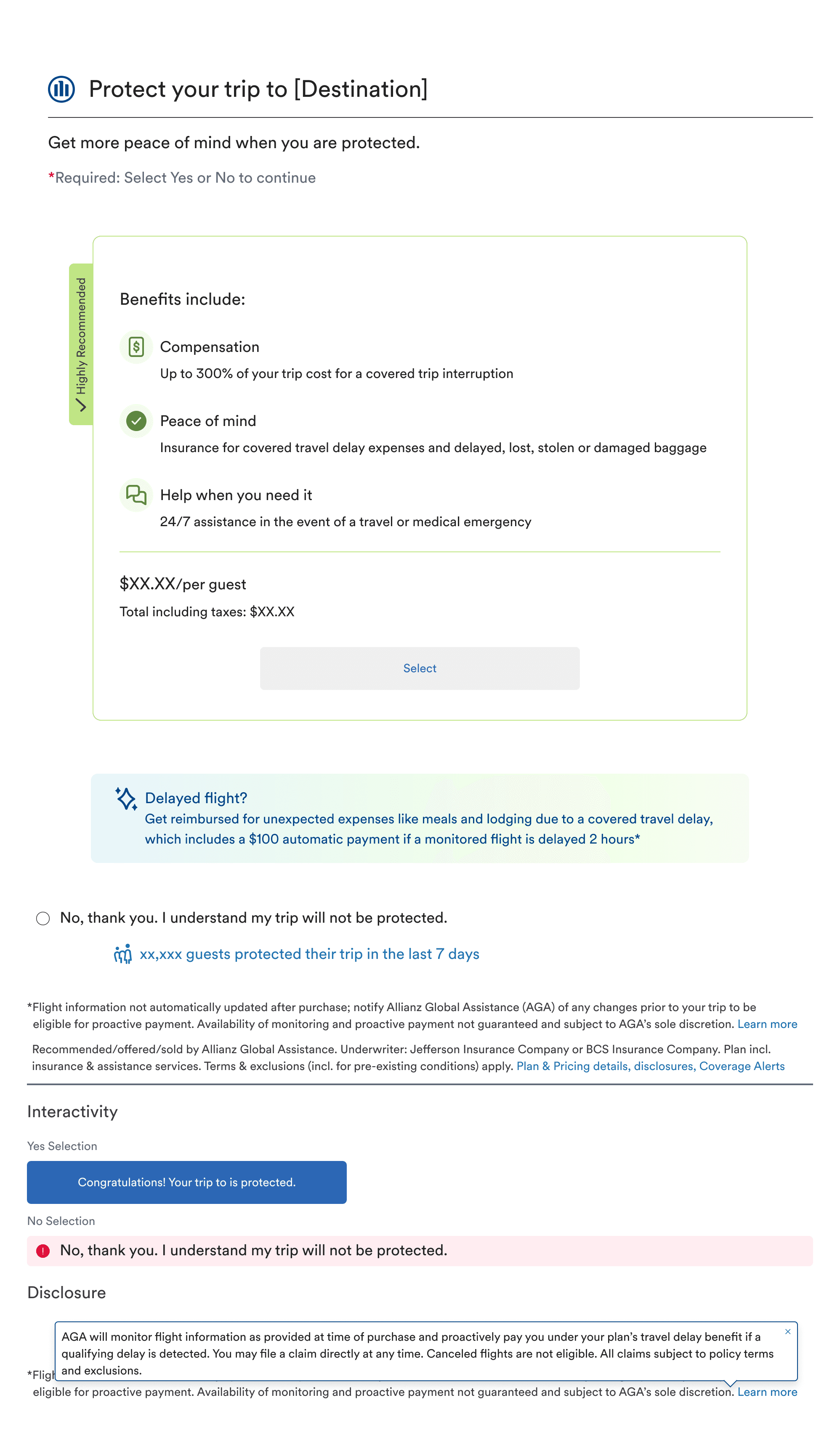
In this context, optimization means designing intentionally to improve performance.
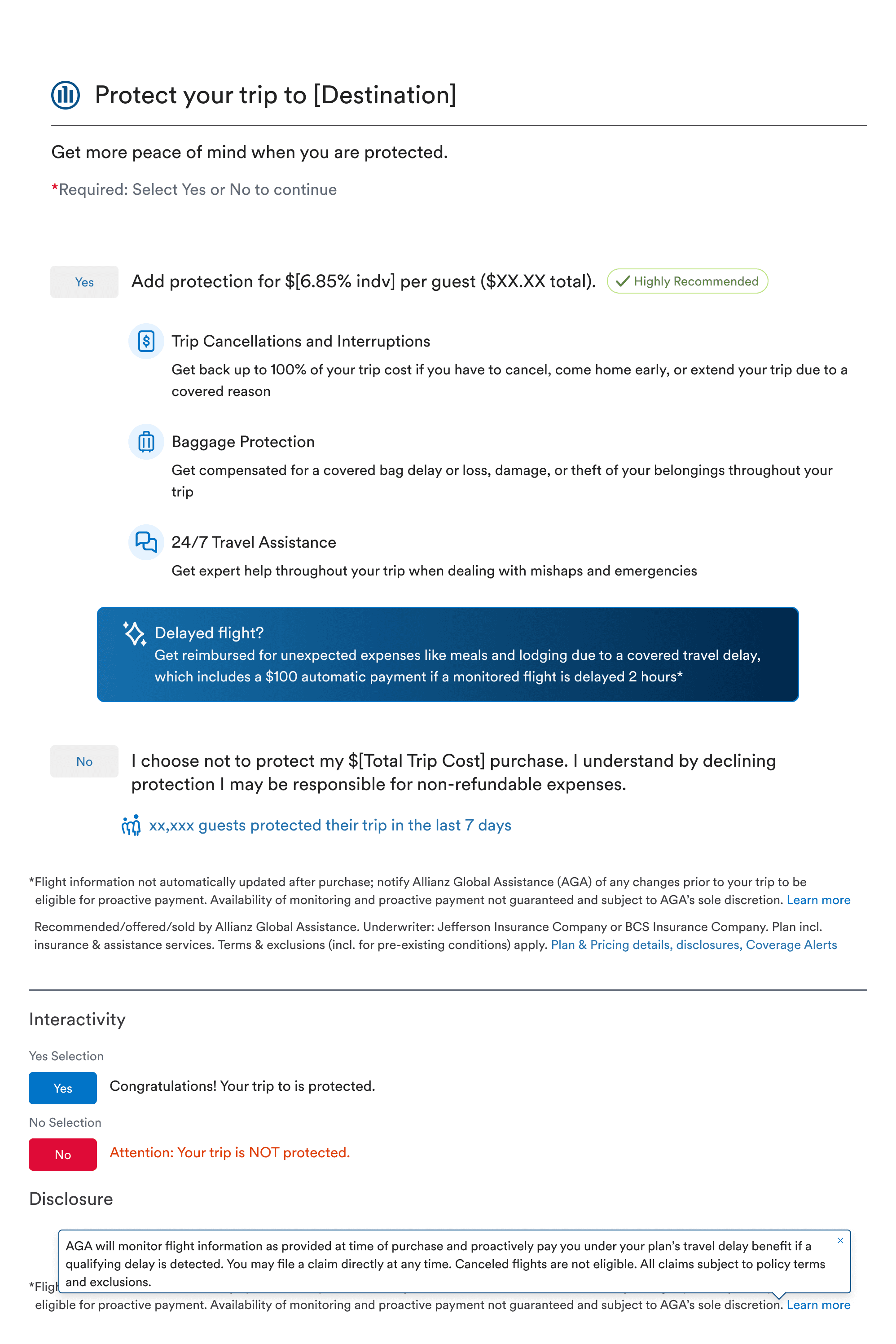
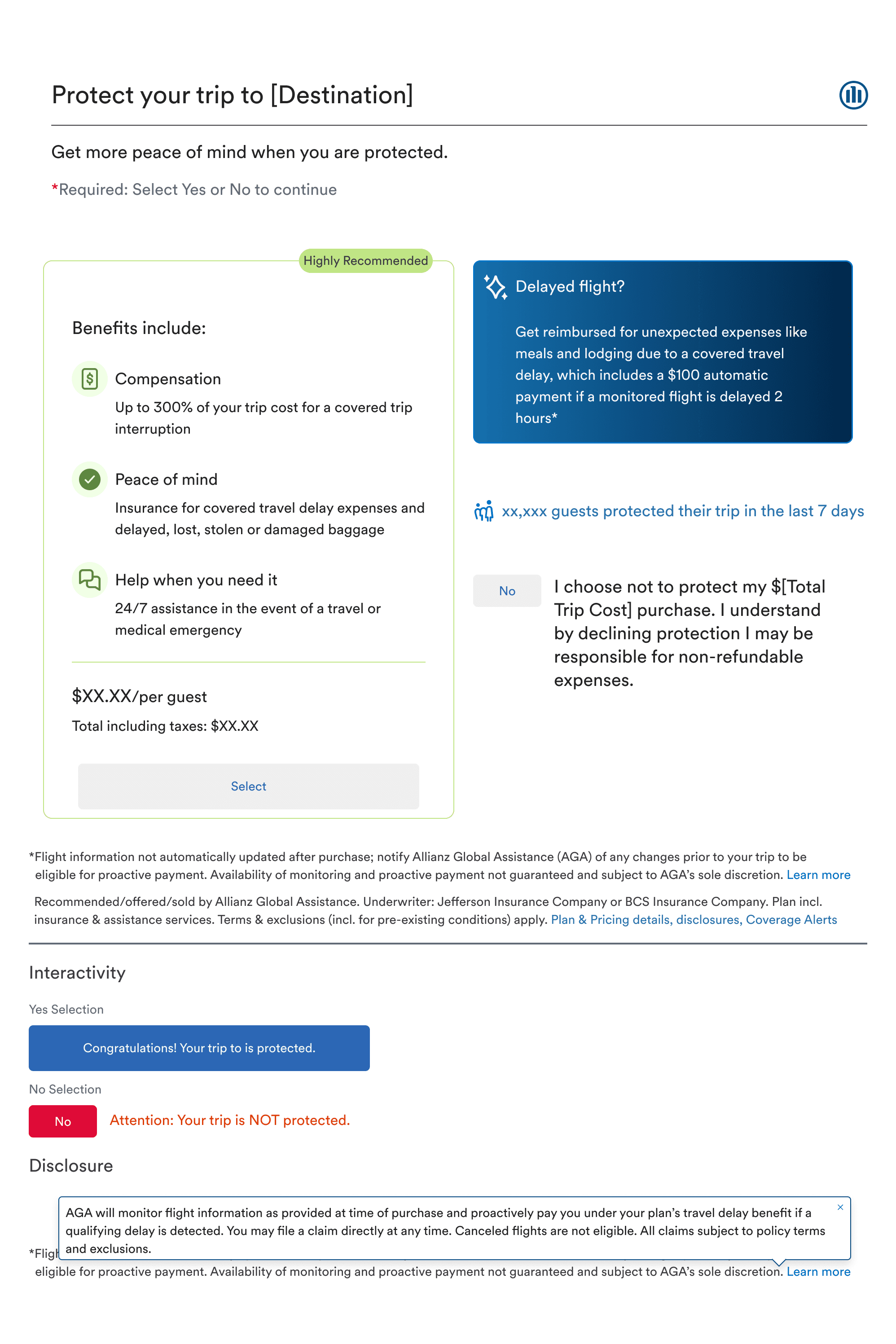
Each variation was built to test specific variables:
Headline alignment (left vs right)
“Highly Recommended” treatments (pill, banner, toast)
Yes/No interaction styles (radio vs select vs color feedback)
Icon style and fill
Gradient treatment in benefit modules
Social proof framing
Each offer variation isolated one or more of these elements to support structured A/B testing.
Design became a hypothesis tool.
In this context, optimization means designing intentionally to improve performance.
Each variation was built to test specific variables:
Headline alignment (left vs right)
“Highly Recommended” treatments (pill, banner, toast)
Yes/No interaction styles (radio vs select vs color feedback)
Icon style and fill
Gradient treatment in benefit modules
Social proof framing
Each offer variation isolated one or more of these elements to support structured A/B testing.
Design became a hypothesis tool.
the bigger picture
the bigger picture
Connecting Design to the Business Ecosystem
Connecting Design to the Business Ecosystem
The offers I designed did not live in isolation.
They moved through:
Internal review
Partner review
UX development
Sandbox configuration
User acceptance testing
Post-production validation
Analytics reporting
This work sits at the intersection of:
Strategy
Development
Configuration
Revenue performance
Optimization is collaborative.
The offers I designed did not live in isolation.
They moved through:
Internal review
Partner review
UX development
Sandbox configuration
User acceptance testing
Post-production validation
Analytics reporting
This work sits at the intersection of:
Strategy
Development
Configuration
Revenue performance
Optimization is collaborative.
Why This Matters
Why This Matters
Before Figma standardization, design operated as static documents passed between departments.
This created:
Delayed communication
Inconsistent systems
Slower iteration
By building structured variant libraries and test plans:
Collaboration improved
Testing cycles accelerated
Design aligned more closely with analytics
Revenue opportunities became measurable
This experience expanded my understanding of UX beyond interface — into workflow, scalability, and business impact.
Before Figma standardization, design operated as static documents passed between departments.
This created:
Delayed communication
Inconsistent systems
Slower iteration
By building structured variant libraries and test plans:
Collaboration improved
Testing cycles accelerated
Design aligned more closely with analytics
Revenue opportunities became measurable
This experience expanded my understanding of UX beyond interface — into workflow, scalability, and business impact.